

Flying-foxes are an important part of Australia’s natural environment, acting as pollinators and seed dispersers that support the health, regeneration and biodiversity of native forests.
Harrington Park Flying-fox Camp
While flying-foxes have been recorded in the Camden local government area (LGA) previously, the camps have been transient and comprised of relatively low numbers.
Grey-headed flying-foxes are listed as a vulnerable species under NSW and Commonwealth legislation due to habitat loss and food shortages. As a result, camps can establish quickly in areas where food and suitable roosting habitat are available, including urban environments.
In April 2026, Camden Council became aware of a significant camp of grey-headed flying-foxes at Harrington Park.
Council understands that the rapid establishment of this significant flying-fox camp has impacted on some residents of Harrington Park, with a range of important community facilities located in close proximity also impacted, including Harrington Park Public School, child care centres, Harrington Plaza, sportsgrounds, playgrounds and walking paths.
The camp has resulted in a significant number of inquiries in relation to noise, odour, bat droppings / faeces, and general amenity.
Because grey-headed flying-foxes are a protected vulnerable species, any action taken must meet strict NSW and Commonwealth legislative requirements.
Council is working with NSW Government agencies, specialist ecologists and neighbouring councils to explore suitable management options, while additional cleaning and maintenance continues in affected areas.
Council is also progressing a comprehensive Flying-fox Management Plan, shaped by expert advice and community feedback.
⬇️
Learn more about what steps are being taken and explore relevant information below.
We will be keeping the community up-to-date with information posted on this page.
To be notified when updates are added or opportunities for consultation arise please click the + Follow button or subscribe to Your Voice Camden.
NEWS
May 2026
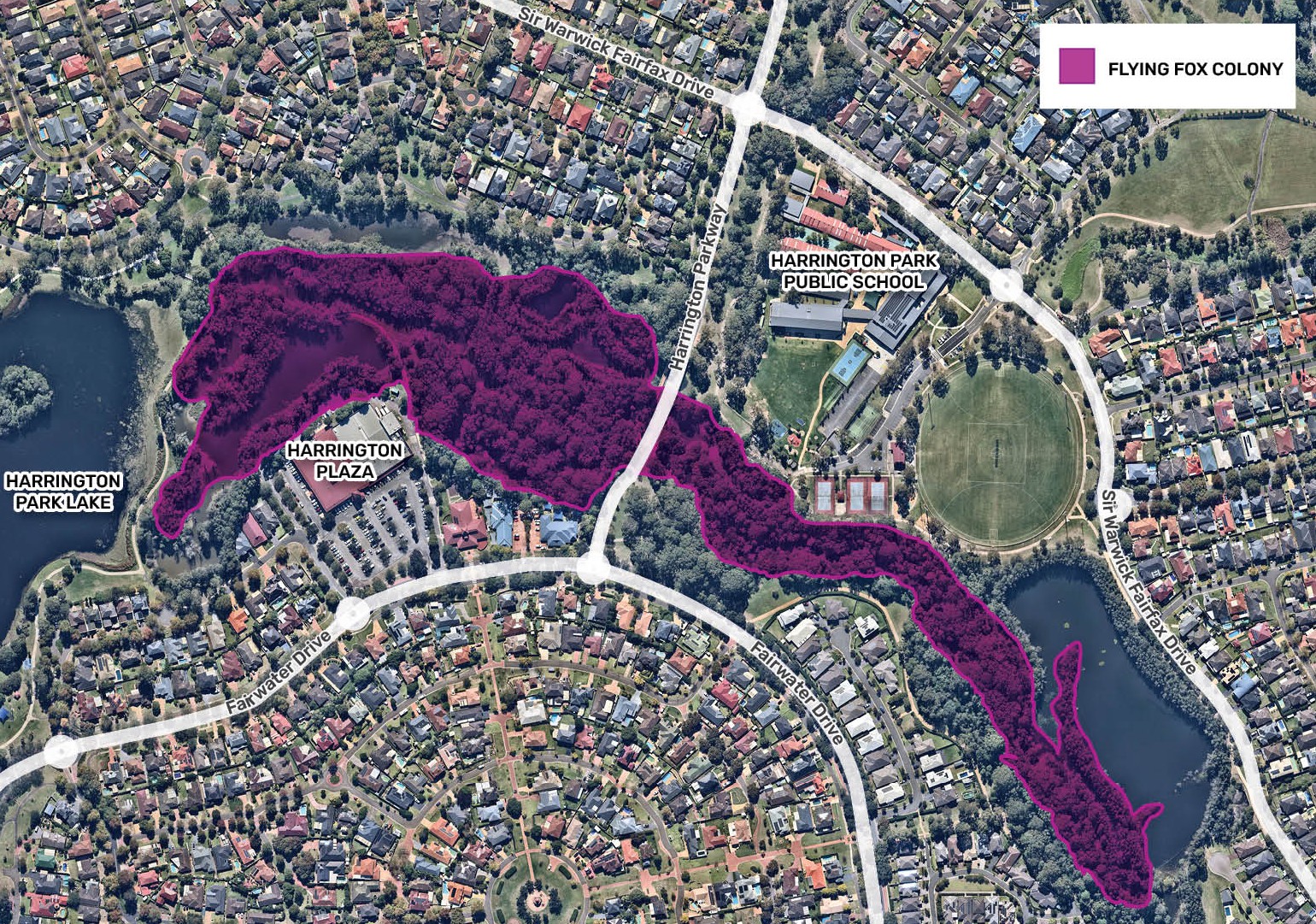
- The extent of the camp expanded from the area surrounding Harrington Park Lake, moving further up Narellan Creek as shown in the aerial image below (include image in May).
- NSW Department of Climate Change, Energy, the Environment and Water (DCCEEW) attended to undertake a population count which estimated a population of 50,000 flying-foxes.
- Council staff wrote to the Minister for the Environment to seek guidance and support on how to manage the flying-fox camp.
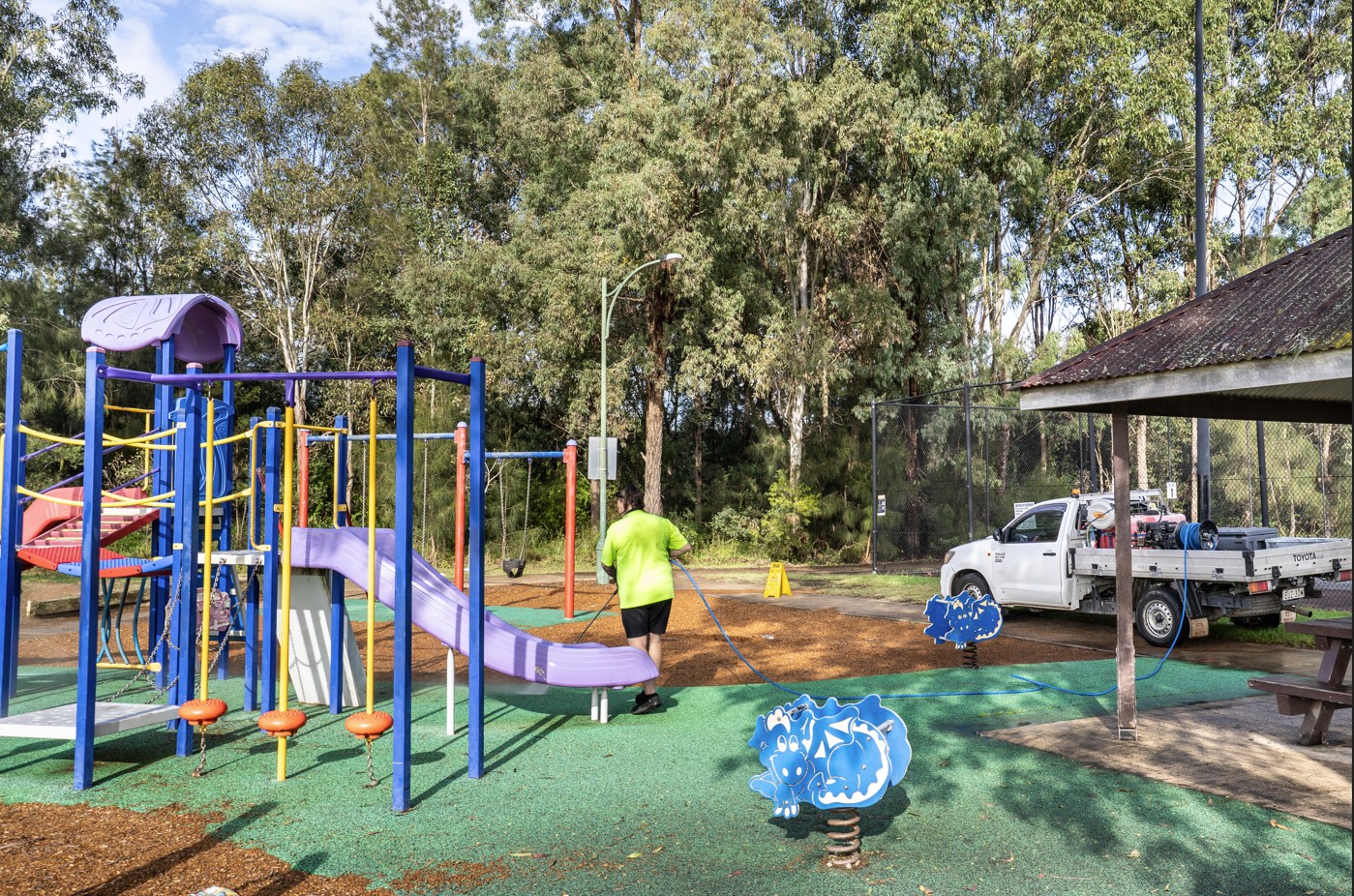
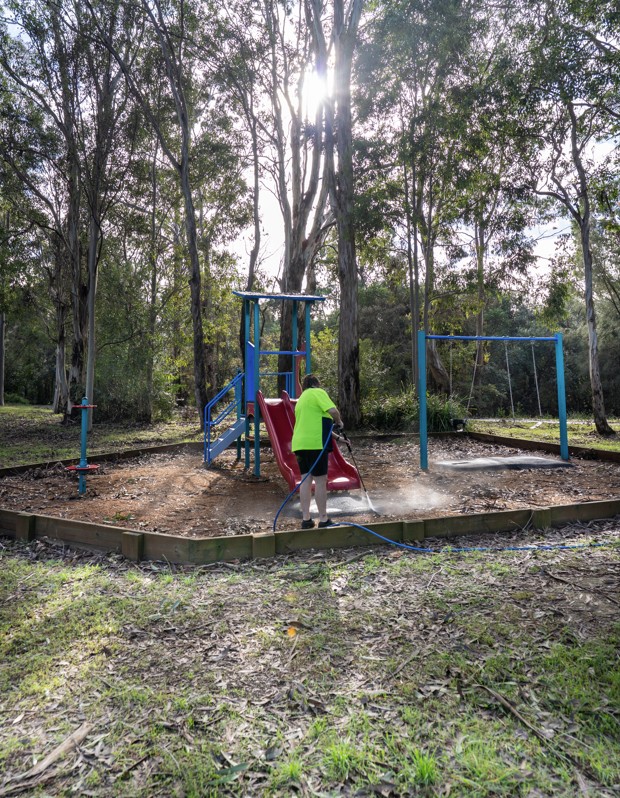
- Frequency of cleaning of playgrounds at Fairfax Reserve and on Fairwater Drive was increased.
- Quotes have been sought
from specialist ecological consultant to develop a detailed management
plan to support ongoing management of the camp by Council. This will
include identifying appropriate management actions and engaging with the
community and other stakeholders.
April 2026
- Council became aware of a significant camp of Grey-headed Flying-foxes in the bushland surrounding Narellan Creek and Harrington Park Lake in Harrington Park.
- Council notified NSW Department of Climate Change, Energy, the Environment and Water (DCCEEW) as they have responsibility for management of threatened species within New South Wales.
- Council liaised with neighbouring councils to seek information and advice on best practice management of flying-fox camps.
- Resourcing was redirected to allow increased cleaning of pathways in response to community concerns.
- Monitoring of the camp was commenced and an initial population count estimated around 30,000 flying-foxes.
- Information was made available on Council’s website to provide information to the local community.
The extent of the Grey-headed flying-foxes camp in the bushland surrounding Narellan Creek and Harrington Park Lake in Harrington Park is shown in the aerial image below.
What is Council doing about Flying-foxes?
Camden Council is working closely with other agencies to determine what can be done to address concerns, including NSW DCCEEW which is responsible for managing threatened species. Council has also sought advice from neighbouring councils that have been managing significant flying-fox camps within their own areas for some time, as well as the Western Sydney International Airport.
Council is also seeking specialist guidance from qualified ecologists for the preparation of a comprehensive management plan to inform Council management actions that are in line with legislation and best practice. The management plan will be informed by feedback and consultation with community and key stakeholders.
We expect that the plan will outline issues of concern to the local community and identify feasible management actions that can be considered by Council and the community to reduce impacts whilst protecting the Grey-headed flying-foxes and complying with relevant legislation.
It is important to note that efforts to relocate flying-foxes often face challenges because these animals are highly adaptable and tend to return to their original camps or establish new ones nearby. Disturbing them can lead to unintended consequences, such as increased noise or stress for both the bats and local residents. Managing their presence often requires careful planning and community engagement to balance conservation needs with local concerns. It’s a delicate situation that highlights the importance of protecting this vulnerable species while addressing the issues they may create in residential areas.
Any works that disturb or impact the flying-foxes must be undertaken in accordance with an approved management plan and a licence from the NSW Government.
In addition, Council has redirected resources to enable additional cleaning of public areas in Harrington Park, including increased frequency of playground cleaning, as well as additional resourcing for street sweeping of pathways in the area.
Council will continue to closely monitor the situation and provide regular updates to the community on actions being taken.
Frequently Asked Questions
Flying-foxes
Grey-headed Flying-foxes
Residential management
📷 Image Credit: Pippa Rose Photography | Instagram
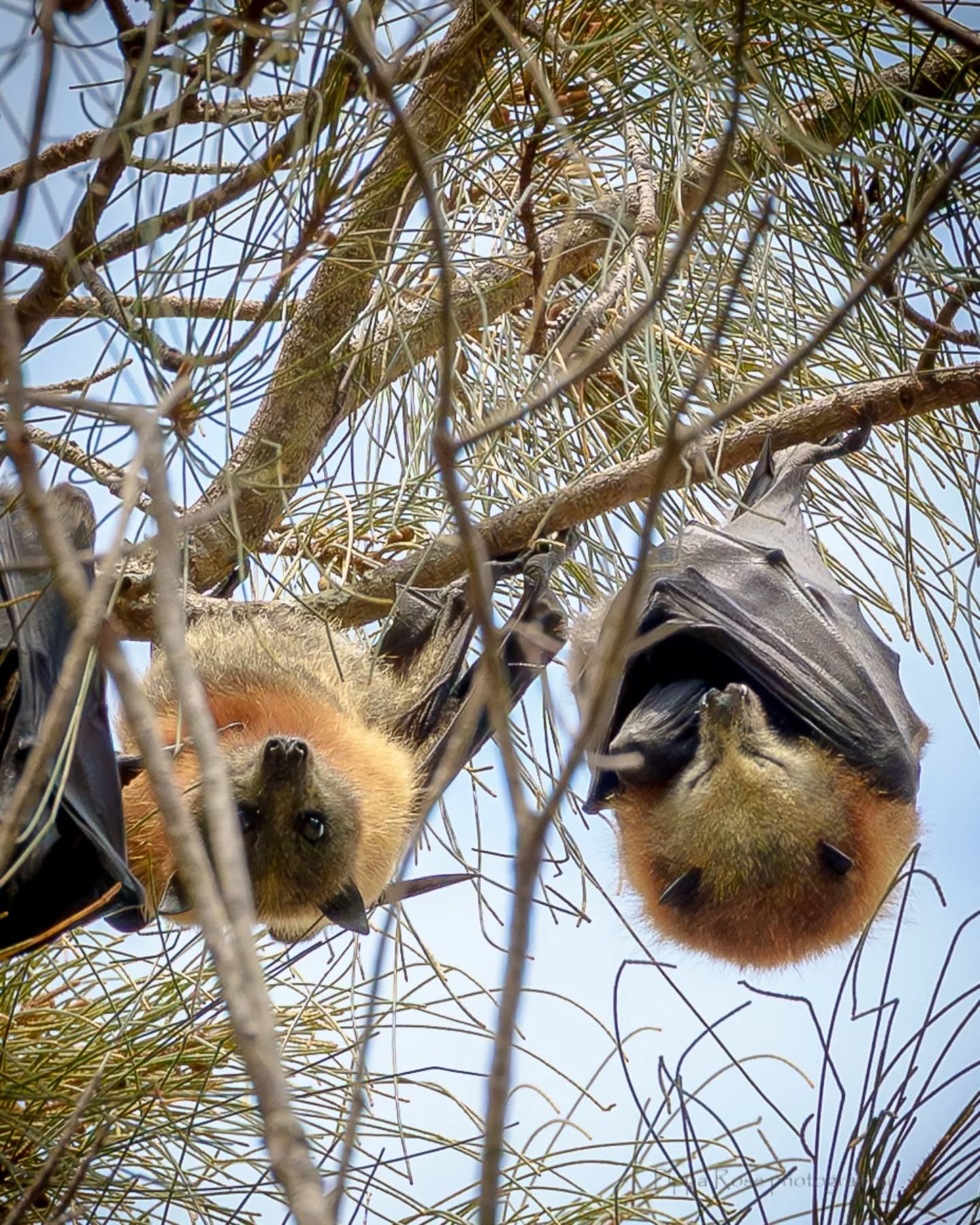
📷 Image Credit: Pippa Rose Photography | Instagram
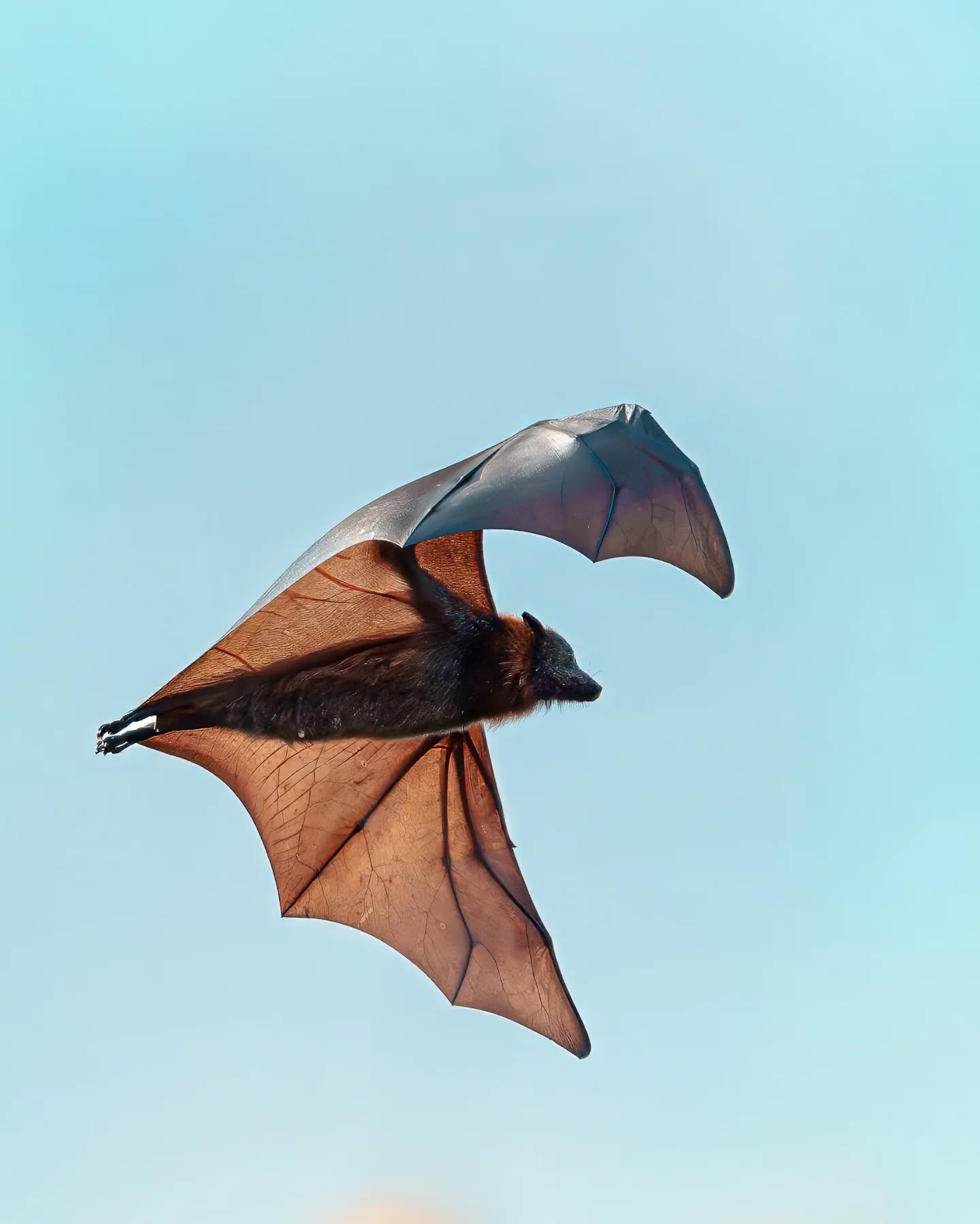
📷 Image Credit: Pippa Rose Photography | Instagram